03 May 2009

The peculiarity of Skype-immediacy and physical separation

Many of us rely more and more on video links for or communication, using Skype for example to talk to people and to see them at the same time. This is a result of the internet becoming a ubiquitous commodity. In fact, the connectedness that comes with the internet is now so pervasive that one is often caught with a feeling of loss when you cannot quickly access the web to read something on Wikipedia, or to search for a phone number of a restaurant, or to get a quick response from a friend somewhere else on the planet.

We connect through mobile phones, netbooks, laptops and less and less through machines in fixed positions. We carry our communicators with us like a Start Trek scouting party, constantly sharing ideas with like-minded people on the web. As the access to bandwidth increases and the cost per MByte of data decreases, the feasibility of adding video to the mix increases. As an early adopter of technology and self proclaimed trail blazer when it comes to accessing the newest stuff that the web can offer, I have been using Skype for quite a while now in business and in recreation. Sharing a desktop via other applications like GotoMyPC allows one to show people what you mean, to run a presentation remotely and to be in the room with a simulated presence that is often so “immediate” that it becomes possible to communicate on a very personal level over thousands of kilometers. One can see how your audience reacts to your words and gestures, you can react through voice prompts and tonal variation, and bring the message across in a way that is only really second to being there physically. The interactive nature of the Skype experience, for example, is something that could not be imagined a decade ago when we started to use instant messaging via the web and cellular mobile links.

These days I use Skype or the Jabber protocols to chat, talk and video link all the time. From talking to loved ones here in South Africa, Australia, the UK, Canada or in New Zealand, to chatting with a collaborator a few kilometers away, working from our homes on a new document deliverable. Constantly in touch, constantly aware of your social network, you become more valuable as a resource. People can see when you are awake, where you are on the planet and even judge your mood by just looking at the cryptic message on your Skype, iChat or Google Talk application.

But on another level I have been experiencing some worrying side-effects of this technology. Being ready on demand to communicate is a time consuming business. Being open to what I often see as unmaskable interrupts inhibits the ability to work for an extended period of time focussed on a specific topic. One may argue that it is simple to just switch the link off, but that feels like, and probably is akin to, going into solitary confinement, or becoming a lonely hermit somewhere on a mountain top. I think it taxes cognitive abilities and it drains energy at a rate that we did not expect. It rushes us along from one message or link to the next to service all the interrupts as well as we can. It is more invasive than e-mails.

Video feeds, despite how positive I feel about the technology, also have a negative psychological effect in many cases. Let me explain: when I do a video call to a loved one in Australia for example, there is the emotional pain of separation, the obvious reality of the missing physical immediacy of that person, which is masked by the virtual presence on my laptop screen. For 10 minutes or so, I am intimately connected to the person on another continent, I see their eyes, hear their voices, read the body language and I am tricked into feeling as if I am being with them in one physical space. So close, almost touching, so alive, almost smelling their presence. And then you terminate the call. Immediately they are again in some far-away location, there are immediate feelings of loss, as if the person was snatched away from your embrace by sudden death. Nothing “real” remains on the LCD in front of you, where their presence only lingers as some digital activity marker on the Skype application interface. The joy of being united is replaced by immediate sorrow. It is as if physical pain sweeps over one at that moment. I do not know if this is a good thing, to be subjected to the trauma of separation on a regular basis.

How this is different from the lightly scented letter, written on fine paper in a familiar handwriting, which is read over and over again and inspected for the slightest of nuances and emotion, I cannot say. However, I have a feeling that the brain is tricked more successfully into a feeling of nearness by a Skype video feed, and that the loss is greater as no trace remains when the call ends.

This, I guess, is the price we pay for being linked so closely through communication technologies, while being able to move and settle globally with immense ease. We remain souls confined to physical instantiations - bodies. Those bodies need warmth and physical closeness, a light touch on an arm, a good hug, and someone to hold when you are happy or sad.

Can someone please invent that “Beam me up, Scotty” machine soon?!


The graphic in this post is from iStockPhoto, licensed for my use. You should buy the rights to it if you want to use it - it is the ethical thing to do.

18 March 2009

Strategies for tough times


When asked recently to share some strategies for tough times, I was surprised to learn that very few of the people I queried on the topic actually had strategies and matching plans for the tough times we are facing today. Is it because we are so used to the rapid pace of change that we just allow ourselves to be swept away by it as we get older? Or is it that some of us feel we are experienced enough to manage? Maybe some of us are just so paralyzed by the imminent disaster that we are not able to think!

Let us look at some of the issues in more detail. I like to start with FEAR. Fear renders us incapable of thinking straight, of devising an escape, and we become like the frog in the water that is being heated and discovers too late that it is going to be cooked! The mechanics of fear and the influence (in the long term) on the brain is well documented. Living under the constant stress of the unknown, the stress of the inevitable impending disaster and the feelings of shame and guilt that often overcome us, the brain is physically modified. In “Destructive Emotions - and how we can overcome them”, Goleman recounts discussions between the Dalai Lama and several important scientists and explains how fear and anger disable our ability to reason. It makes sense: when you are being set up for lunch by a lion, there is no reason to think, there is only reason to run! If we are constantly bombarded by fear and negative emotions, the brain is modified physically, impairing memory, lowering our ability to fight off disease, etc. Being able to balance the negative emotions with positive images and stories, with laughter, resets the situation. Emotionally intelligent people have the ability to balance the negative and the positive and in this way regain control over the frontal lobe activities related to logic. Logic allows us to see fear and other negative emotions for what it is, and allows us to inspect the reasons for our misery. Only then can we consider the strategies and plans to overcome it.

The first part of our strategy is to cultivate positive images and thoughts on a regular basis and to consider the good things in our lives, even in the darkest moments. Read a good uplifting book, work in the garden, play with a dog or a cat, meditate, pray, go for a long walk and look for the beauty of nature around you, blank out the ugly, look at the bark of a tree and brush your hands over the bristly leaves of a conifer.

Once your brain is ready for the ideas to flow freely, get into action, WORK. “Work?”, you ask, “Is that not what causes so much misery?”. David Whyte writes in his astonishingly beautiful “Crossing the Unknown Sea: Work as a Pilgrimage of Identity”: “Why are the stakes so high in our work? Why do we work long hours, ignore our children, neglect our spouse, spend enormous amounts of time away from home, and, at worst, stoop to theft, bribery, threats, and bullying to get things done?” And then: “ The one who refuses to forget their humanity and in remembering, helps everyone else to remember, too.” This is the key, work, any kind of work, volunteer work, your chosen career, work at the church on Sundays, all of these things are in fact opportunities to contribute to your fellow man, to act humanely, to go outside of the self and into the domain of those with needs around you and to help them. This is the counter-trend! Reaching out through work is powerful. It gives meaning to your being here, lifts the image of the self, adds worth to every second spent alive. Laced with the humanity of a smile, a joke at your own expense, a tender word, a touch and sometimes a quiet tear in deep sympathy, it becomes the wings of freedom for your brain to act in the most positive way of all - innovation.

The second part of our strategy is to work with a positive attitude in a servant manner so that you can see the opportunities for innovation. Even if you have lost your job, do not stay at home, get to the nearest community centre and volunteer, help the neighbours with something, contribute to the lives of others. It is strange how opportunity comes knocking when you are in good spirits.

Once you are focussed outside of yourself, you can start to make plans to move on, to turn the tough times into prosperous times for you and those around you. Working as a volunteer while your car is being repossessed has a negative impact on you and your ability to help others. One must be practical. I have learnt that one must have two plans at any given time. If plan A fails, move to plan B and promptly devise plan C and possibly even D. The first thing to do is to get to grips with what you have now squarely identified as your specific set of problems. Remember, standing back and working with others in a giving way and cultivating positive energy inside and outside yourself allowed you to see the issues you face for what they are, problems that can be surmounted by logic and planning.

“Where do I start though?”. By looking at the problems one by one and even if they are not linked, trying to find the one that, once resolved, will bring the biggest relief. However, this is not as obvious as it seems. Sometimes one can start with something that is fully under your control, just to show that you can take control. Give up something that is costly, like smoking or drinking excessive amounts of beer, or Coke. You have enough incentives: money, health, but above all, control over something.

In “Innervation - redesign yourself for a smarter future” Guy Browning tells us that creativity starts by standing back and looking anew at your circumstances. Identify what it is that prevents you from getting to where you want to be from where you are now. List these things. Ian Woodrow starts here in his brilliant little book “Close… but no cigar - six easy steps to solving business problems” and states that these are the little critters that must be sorted out. Within a few pages he develops a great strategy to understand the problems. With this under control, you can plan a course of action that will take you to the envisaged state in the future. The trick is to try and estimate the risks, those things that you must manage closely to ensure success. If possible, devise at least two plans to get to your goal, or even slightly different goals, but both desired destinations (maybe one is less desirable than the other, but both are much better states to be in than where you are now). Take cues from your work with other people, as their advice as well. Lastly, write down the plans with dates and milestones so that you can work towards fixed goals. If you miss a milestone, stand back, evaluate the problem, modify the actions, try again, ask for help, etc. If all else fails (sometimes the environment changes again), switch plans. Be positive.

Having a plan and putting it into action is the third essential part of the strategy.

Lastly, give yourself credit for taking control of the situation. Smile about the things that did not work according to the plan, and devise new plans. This is learning. It changes your filters of perception and allows you to see new opportunities. Sometimes we see so many opportunities that we forget to focus on our original goals. Stand back and decide that focus is needed. Some plans must actually be executed to conclusion before you will benefit from them. The best way to stay focussed is to devise an end-state that is not too materialistic, and also not too emotional and lofty. An end state is often a short paragraph, written as a story, telling you what it will be like to be in the desired state. With this fixed in your mind you can focus and evaluate progress properly. There is no secret here, no magic, just plain old common sense.

The final part of the strategy consists of focus and perseverance. Pin your ears back and race towards the finish line with all your might and do not be distracted by the wooly mammoths of fear and self-doubt!

Personally I set small short term goals and my long term plans are rather audacious. It must be worthwhile to embark on the journey, with a goal at the end that forces me to look up, otherwise the stones in the road may become boulders from where I stand.

The image at the top is from iStockPhoto. I bought the rights to it, and so should you if you want to use it.

09 March 2009

2012, Pole Shifts and Global Warming


As a scientist I am often asked to speculate about theories, myths and legends. With the current focus on global warming I am often asked to comment on the reasons for the phenomenon, ways in which we can prevent the situation from getting worse and often, if it could be linked to other phenomena, predictions by the ancients and and even to partake in bets about the end of the world as we know it.

The last part is simple: as I have no evidence and information that I can use to even develop a feasible hypothesis about an apocalypse date, it is useless to take a bet on the end of the world. In any case, should I die before such a date, it would signify the end of the world for me, and would that be good enough as a deal breaker, and if I did win the bet (how?), why would I worry, as I cannot easily rake in the millions riding on it!

The other parts are more difficult, and more interesting to attack. I do not believe that global warming is so simple a phenomenon that we can point a finger at the big corporations spewing toxic fumes, or my old fridge or even the cows farting, as the major reasons for global warming. I just know enough about systems dynamics to consider a multitude of interrelationships that may be the cause. But let us consider a few of the popular theories at this time.

First of all there are the stack of prophecies. These range from what Merlin had to say about the impending catastrophe, to what the Mayan calender points to, the predictions of old faithful Nostradamus and obviously the I Ching, the Bible and several other “holy” texts. I have tried to read many of these “holy” texts or sections of them over the years, but I am not sure that I can safely claim that any of these are clear on the specifics of mankind’s demise. Sure, as a Christian I can tell you that the Bible is clear about a final day of reckoning, a time when all that we know as the world will be destroyed to be replaced by another place. It is also made clear that no man will know the date.

Merlin is a great character, but I have no evidence that that character belonged to a real flesh and blood human like the rest of us. Nostradamus did actually share the dust of Terra with us, and he did write some compelling things. However, every time we consider his prophecies we have to do so with 20-20 hindsight. Only after 9-11 could we link the prophecy to the event. Would it not be nice if we could do this with a couple of days to spare, or is this just the essence of doomsday prophecies: no way to know “when” until after the fact?

Which brings me to the current topic of many videos on YouTube, large discussion groups on all sorts of web pages and even prime time programs on TV: The Mayan 2012 prediction. Now for those living in ignorance, the long and the short of it is that the Mayans were really good at astronomical observations and that they also wrote down quite a bit of their work. They devised a very accurate (insanely so for the time) calendar of astronomical events like solar and lunar eclipses. This comes as no surprise as people were often offered to the gods on those special days and knowing up front about the impending solar eclipse would give one and one’s network of friends and family a great deal of bargaining power, not to mention the ability to survive mass offerings. Still, the events linked and predicted by these masters of calculation amazes us all and they predict a bit of a final event around 2012 (December to be more precise). I have some references at the end of the blog for you to surf to. My personal feeling is that 2012 was really far into the future for them, way beyond any retribution, and I am not sure, but it could also be that when they saw what was going to happen then, they promptly decided this was it - the end. In reality, planets will align in a certain way during 2012, but we have no reason to believe that this will cause the whole “engine” of the solar system to seize up and to go down in flames. It takes a bit of maths and calculations to show what the forces will be on the participating planets, but I do not see anybody publishing the results of those. My guess is that the scientists that can do this, discover that it makes no difference, and the rest just repeat what is read on the web and take it for the truth.

“But global warming is different!”, I hear you say. Yes, and so it is, but if you page through the web of links below, you’ll see lots of “links to show that this is no coincidence”. The human mind is a very susceptible thing and it is constantly looking for cause and effect links to try and understand the current situation. Our survival depends on this, and we have been very successful in the past doing just this, finding reasons for what we see around us. We have found many causal relationships and used these to predict the future and in this way we have survived and thrived as a species. Some things are a bit more non-linear, and to try and find simple links may cause us to miss the reality by quite a mile, thus ending exactly where we did not want to be, in the middle of (often) a self-made disaster.

Sometimes global warming is linked to the discovery of a proto-planet called Eris outside the orbit of Pluto, which was promptly relegated to a proto-planet itself. So now we have 8 planets and a couple of large planet like objects in the solar system. But back to this planetoid. This thing is seen as the mythical planet that will swing past earth and that will slow it down so as to stop the rotation of the earth. Back in the Old Testament of the Bible, there is in fact a situation where just such an event occurred. Anyway, you may go read that link below as well. Personally I am quite ok with these things, if the earth has to park for a day or so, to allow Joshua to sort out the enemies, cool by me. If it happens again, and we survive it like he did, even cooler. From a scientific perspective one must ask what the physics of such a situation will entail, and what would happen to the physical systems of the planet, including tidal action, weather systems, etc.

Back to global warming, which is often mentioned as a result of these events mentioned above. Is it possible that the current melting of the ice caps is a result of us doing damage, or is it these extra-terrestrial events, or a combination of it all. I do not know really, but I do believe that we are really messing with our local eco-systems. That is always a serious issue. Whether we can influence such a large system as that of Terra over a period of about 150 years is my open question. Most large system are really rather solidly set in their ways and no amount of arguing from the chaos guys will convince me that the earth is an exception. I believe we will kill ourselves in local optimisations of waste long before the earth system will just flip its lid. I think we are a bit too idealistic to think we can sink this ship by ourselves. Yes, we can make our lives a real misery by cutting down the forests, by fishing waters to emptiness and by pumping so much smoke into the air that we suffocate. Some trees will always survive this, some insects could care less, and many furry animals will go merrily on their ways with humans dead and forgotten.

Let’s face a fact or two here. We emerged from a small ice age in the 1840’s, something not brought on by the cool gadgets of the Renaissance. We have gone through hot spells around 1000 AD when the Vikings found it easy to sail to Iceland, colonise it and cut all the trees down. But soon it became rough and they lost links with Denmark and Norway. It became cold and the seas were not that friendly. Must have been the loss of the forests of Iceland I guess (!). People migrated across from Indonesia to Australia at some point when the land masses were linked because the ocean levels were low. Was it because of so much water captured in ice or because it was a hot period and water was not trapped in ice but actually in the ocean or in the weather system in general?

The blog is getting too long, so here goes with the 2012 “Flip of the Poles” theory. So if it is not serious enough that all the planets will align and thus tear us apart, the poles will flip in a day and wipe us out as the cosmic rays come in to fry us when the atmospheric magnetic shield of the earth collapses. Our electronic systems will fail, birds will go south (literally), whales will beach, people will be disoriented and snails will stop snailing. What happens to tortoises I am not sure, but supposedly they have survived previous flips. You see, we have had this in the past, but we are not sure that humans will survive it this time around.

The reality is that many scientists are sure that a flip is a slow process, taking a few hundred years and that the effects of such is phenomena will manifest in animal migration patterns being disturbed and modified, that our electronic systems will have to evolve to cope with the effects, etc. It may have an impact on weather and in fact many suggest that the current spell of global heating has to do with the sun and its recent polar flip, amongst other things. A polar flip may just steer us towards a small ice age again, who knows.

So there you have it. I do not know, and frankly, I have many more immediate problems to resolve. I worry about the water resource in South Africa, about poverty and diseases like HIV/Aids, malaria, etc, and about my retirement annuity. As a friend recently said, if only we get wiped out by a comet, it would be great. He would be the first on a hill somewhere screaming: “Bring it on!”.

Sometimes we have to be rational, face our problems and do something about that what we have control over. Sometimes “hoping” for a disaster of extraterrestrial proportions to end it all and to absolve us from the possible crime of wasting the planet ourselves, is just childish. If something like that happens I am sure the human spirit will come through for us if there is the remotest possibility of survival. For me, in God I trust!

_________________________________
This is not a reference list, but rather a list to help you see what is on the web on these topics
It is not the only places, but I found each interesting, for various reasons!

From a GAIA perspective

Doomsday

Related to other lore - human origins

The birds are going south!

NASA Sun Polar Flip

NASA Eris

Pole flip simulation (cool!!)

Bible Joshua

++++ Hey, my graphics come from iStockPhoto - and it is copyrighted. I bought the right to use them here, so please respect the property of those artists and buy their work if you like it. It is the right thing to do. ++++

10 January 2009

Murder at 175 Haldon Road

South Africa is, contrary to what the government wants the world to believe, slipping even farther down the path of extreme, mindless violence and criminality. I grew up in Bloemfontein in a house situated on the edge of town (Google Earth screen shot left), because my father loved the fact that we could walk out of our garden into the garden of nature. There we played as kids learning about the richness of the Free State fauna and flora; the strong scent of wet plants after a summer rain storm still comes to me now as I write this piece.

We had many happy years there, in fact we lived there from 1969, when the house was built for us and when my father died in 1988, my mother stayed on in the house up to 2003, when it became obvious that it was too risky in the new South Africa for her to be living there alone and we sold the house. This house was acquired by the parents of a school friend of mine recently and they moved there as it was becoming too risky for them to stay on the small holdings about 3 km west of our house. Murders, burglaries and rape occur regularly in these parts these days, none of it even making it to the local news papers anymore. No, it is more important to report on the serious issues in Gaza at this time (and I agree that no matter where you stand in this battle, it is a serious issue). But I am sure that for us in South Africa what is happening locally is also of the gravest concern.

To return to the topic of this piece: Yesterday the elderly couple hired a painter to help them with some painting around the house. When the husband left to quickly buy some supplies from a nearby shop, the painter went into the house and killed his wife in a brutal manner. The reason: no-one is sure, but it could not have been for money, because these people were not wealthy, it was not for food as the government often claims, or for a job, as both had been provided for through his employment on that day.

Maybe it was just because it is easy to kill and walk away from it in South Africa. It is easy to target the elderly. Some would even say it is easy to get away with murder if you kill people from the appropriate race or cultural group in South Africa, as was witnessed earlier in 2008.

Not many people read my blog as it is not an “open” blog, but those of you that do stumble upon it while surfing the web, please stop for a moment and imagine what it would feel like if you discovered that a brutal murder was committed in the house where you grew up n harmony with so many people and cultures. Imagine your room where you went to sleep safely every night, now the scene of a hideous crime, blood staining the walls. Imagine the sorrow of those hat have lost a loved one for no other reason that law will not be enforced by your government before an election they fear they might lose. Imagine your sense of powerlessness as part of a minority in a country where complaints about this situation is brushed off the table as eurocentricity or racism of some kind or just not being able to live with the reality of a new dispensation. Then consider whether you want to invest or support such a country.

I write this from another city in South Africa, and my mother is relatively safe in her new house behind burglar bars, alarm systems and quick reaction panic buttons. But my friend lost her mother and for her there will not be any real recourse to proper justice. A murder was committed at 175 Haldon Road in Bloemfontein and it does not even make it beyond a small article in the local news paper. These are the atrocities that we live with in Africa.

26 December 2008

The Southern Higher Latitudes

For some time I have been considering the climate and other desirable features of the higher latitude cities. In particular, I am interested in the southern latitudes. This should come as no surprise as I live in South Africa. The photo at the right here is Cape Point as seen from a stormy sea just south of it. I was lucky to be on a South African Navy Corvette when this photo was taken. It might seem calm enough, but those waves are 5m from top to bottom! Other photos are from south of Dunedin in New Zealand and obviously of the incredibly beautiful Table Mountain in Cape Town (With permission from Martin Wierzbicki).

Back to the topic of this piece; reading Jared Diamond’s interesting work “Guns, germs and steel: a short history of everybody for he last 13,000 years” I realised that the lands at higher latitudes and especially those with Mediterranean climates are rather special in that often the edible grasses came from those areas (especially in Eurasia). These grasses were domesticated early and proved critical to the development of civilisations. I guess the question then is why the tropics are almost as hostile as the arctic zones when it comes to food security for people, etc. Jared has several wonderful explanations in the book and it is well worth a read.
Still not satisfied I kept on looking and found this article at a NASA site. In “Location, location”, Rachel Hauser tells us that in 1990 about 35% of the world population lived on 1% of the ice-free land. We are also told that somehow the rate of economic growth of the poor nations are much lower than that of the rich nations and the link is made to the location of the fastest growing economies (despite the process of globalisation). Interesting enough, most of the poor countries are situated in the tropical regions of the world. Looking at climate zones and coastal proximity, it was found that only three tropical economies were classified as high-income (Hong Kong, Taiwan and Singapore). Every country zoned as temperate had either middle or high income economies and in countries (and economies) straddling both temperate and tropical climates (for example Brazil and Australia), it was found that wealth concentrated in the temperate zones.


The three key factors driving this situation were: coastal proximity, prevalence of infectious diseases and agricultural productivity. It is explained that tropical agricultural yields are low because the soils are more “fragile” than temperate soil, etc.

These things all make sense to me. I also find that I cope better with climates that are cooler and often less humid. I like “seasons”: very cold winters and mild summers. I work best when I can see how the days get longer or shorter and where dusk and dawn are long events. Some time ago I had to write a motivation for air conditioning of some old offices. I had a tough time explaining that most people find it hard to concentrate or work in an information type environment for a reasonable stretch of time when it was hot. I was told that because they were sitting quietly at their computers, they could easily stand temperatures up to 30C. I did not agree, and eventually the fight was won, and now I see people setting their conditioners to about 23C, and I see them actually working and not looking tired and restless. The climate in the higher latitudes is such that one can easily regulate the temperature in the working environment via natural means. Anybody who has been to Hauser’s three successful tropical economies will also know that there the information worker environment is highly climate controlled. Is this possibly also a key to economic success? And if it as simple as that, why is it that the poor countries do not take this information to heart like Singapore did, for example? Any ideas?

01 November 2008

All Saints Day


On the 1st of November most Christians in churches closer to the Catholic Church will be keeping All Saints Day. This is in contrast to the pagan feasts and other reasons for parties falling on the 31st of October, going under the name of Halloween.
I’ll be in Brisbane on Halloween and flying from Australia to South Africa on All Saints Day. It is about the context of All Saints Day (ASD) that I want to talk in this blog. Thinking about the context of ASD, I suddenly thought about my grandmother. Born just after the turn of the previous century, she saw both world wars and raised 5 children under very difficult circumstances in South Africa. It was a time of colonial rule of most of Africa, and she and her children were called names and ridiculed for speaking Afrikaans (a descendent language of Dutch). Discrimination against Afrikaners like my grandmother was not recognised for what it was by the world at the time - racial and cultural discrimination of the worst kind. One wonders how this contributed to the nationalist dreams of people like my grandmother and her children, and how it contributed to them being ready to be exploited by politicians during the Apartheid Era.
But these things mean nothing when compared to the thing she did well. She had a secret recipe for a South African delicacy called a “koeksister” and here grape jam was beyond belief on warm toast, made by toasting bread directly on warm stove plates on those eye-watering cold winter nights in Kimberley. She was not an easy woman to get along with, but she had a simple approach to life: always speak the truth and keep things simple.
She prayed a lot and in later years when we spoke on the phone (we would call her once a week) she would often say that she has so many people to remember in her prayers that she often fell asleep during these prayers. She would quickly add that she always had us up front in the queue, so we would be ok!
She was an active woman her whole life and she had a coloured young woman living with her in the house, and when this lady’s son was born, he stayed with my grandmother, often sleeping with her in her bed after falling asleep after a long day and a great bedtime story. She always said that he was her reason for waking up! On the day she died, she got up in the morning, at age 94 and still readied herself for shopping. She walked a couple of kilometers to the shops, did not feel well and went past her doctor, who immediately had her taken to hospital. When the family reached the hospital, she was calm and collected, and with a clear voice gave them the instructions on where the koeksisters were, where the frozen meatballs were, etc. She had prepared everything in detail for her funeral and the family get-together as is the custom. And with clear eyes and a smile, she asked that we let her go and she passed on.
There was a feeling of immense loss but also of great peace when I was told of her death. I knew that from that moment on one less person was praying for my well-being. There would also not be anymore koeksisters and grape jam on toast dripping with butter. But most of all, we have lost a person of great serenity, of simple and straight-forward values and a person with wisdom of almost a 100 years locked up in every sentence.
Tomorrow on the plane I’ll be remembering her on All Saints Day, for all the right reasons. I know we all have people to be remembered on this day. Go ahead, let’s be grateful. Being touched by these people gives us direction. And maybe, it shows us the way so that we can become saints in our own way.

26 October 2008

Operating Systems with Client Awareness


I need to explain my background in computers as the context for his piece.  I was privileged to have access to an electronic calculator when I was a kid.  This was 1977 and I was positively influenced by the power of this device.  I soon understood that getting the right answer meant that I needed to consider the rounding errors that were still part of the calculators of that era.  I became a master of the little machine by spending an enormous amount of time with it.  

In 1980 I became the proud owner of a Sharp EL5100 programmable calculator, while I studied computer science at University, learning to program in FORTRAN 77 on a mainframe.   This calculator was followed by a Sharp PC1500, which I could program in BASIC.  Then I bought an Apple //e in 1984 and finally a HP15C (which I still use today).  I used the Apple //e for programming in Apple 6502 machine code, Apple Basic, Apple Pascal and Turbo Pascal running on the Z80 card of the Apple.  For the latter I wrote my own graphics routines that used a tunnel built into the Z80 card to access the Apple routines in ROM.  I had the opportunity to use the first Macintosh and Lisa computers and then I was forced to switch to PC architectures in the early 1990s, where I continued to program in various languages, including C and C++.  I wrote my own PostScript driver for the Apple //e before I retired that machine in 1998!  I think it is fair to say that I have experience in tweaking and forcing hardware and software to do my biding. 

I used a wide variety of application software and wrote a lot of my own as well.  Over the years I realized that one can spend an inordinate amount of time on tweaks and tasks other than your primary goals, like writing that research report, developing that business presentation or writing the book you always wanted to write.  Most of this tweaking and fiddling comes naturally to so-called techies.  It is easy for them to set up the operating system on a new machine, to extend the word processor with scripts and to add all sorts of fancy formatting and programming to a spreadsheet.  But it eats up time.

Many people do not want or could not care for this sort of “power”.  They want to access the power of a computer.  They want to be seen as a client by the vendors of the software and hardware, not as collaborators on the software and testers of the new interfaces.  They want to point at an icon that makes sense to them, get a page up and start typing the letter, etc.  They do not want to learn how to set up a piece of software, or tweak it to work with the printer.  90% of the features are just hurdles to them.  

This is my contribution today: maybe we should start to look at these users as clients of our hardware and software, not as useless or stupid newbies that should just get out of our lives.  If we see them as clients, we will design the operating system and the hardware so that they can feel comfortable, so that they have access to the powerful functions without knowing to open a terminal window and type SU to get administrator rights to modify things.  Yes, allow that for the tweakers, they are clients too.  But many people want to work (write a fancy report, add a picture, add video, etc) without wanting to know about file formats, codecs, etc.  

I am using a MacBook Pro running OS X 10.5, a descendent of the Berkley Software Distribution of Unics and the FreeBSD line of code as well as the ground-breaking NEXTSTEP system.  So, at heart it is Unix.  I also run openSUSE 11 in a VMWare fusion box, along with Windows XP Professional and Windows 98 from Microsoft on the Mac.  SUSE is a true Linux child and this version is a very popular distro with only Ubuntu possibly being more popular.  There are similarities between the metaphors of OSX and SUSE, but one thing is clear, OSX is streets ahead in ease of use.  I switched on my Mac out of the box, it ran unassisted through the initial setup functions, found my wireless network, connected, discovered my printers on the Microsoft based network, and was ready to roll before 30 minutes were up.  I then installed several packages.  Put in the CD, click and wait, and then work, no drama.  The only software that took a bit of tweaking was the VMWare Fusion stuff.  I discovered that I was sold an older version and once I downloaded the free update, things went better.  Then I discovered something interesting.

Installing XP under Fusion was simple enough, but took 30 minutes and several tweaks (similar to setting it up on a new PC) before it was functional.  It was not simple at all.  Windows 98 was even worse and needed many tweaks to get to work.  SUSE took me a full day to get going!!  I had to wade through sub-directories and fiddle packages, I had to get down to code and scripts to get the VMWare package installed, resorting to super-user status before I could get it to work, with no real gains.  The openOffice (2.4) with SUSE would not read some of the documents done in the same version under XP, asking for character sets etc to be modified, corrupting the files.  So, SUSE is not for my wife!  It does not understand anything about serving me as a client, it assumes I want to waste my time tweaking things.  It is Unix, and so is OSX, but on my Mac I am treated like a valued client, on SUSE I am treated like I should know it all or suffer.  It is too busy being smart-ass and cool to care about the user that just wants to get on with work. And the software on it is really good (in the sense that it is free and can be coaxed into doing things if you are willing to sit and fiddle).

Windows XP is really not bad after all.  It works most of the time, as long as you do not overload it over time with lots of applications and modifications.  Office 2007 is also very good and quite intuitive in a weird way.  I can do really good work in minutes and I can access the advanced features easily when I need to.  Not bad and I hope Windows 7 is more like XP than Vista.  

Lastly, my son bought a new laptop and it only comes with Windows Vista Home (something – not Basic).  This is a self-indulgent OS, constantly going off to the internet to check things, constantly telling you what to do, throwing stuff into your face without you asking for it, and it does not just connect and play.  Not for my wife either, and by the looks of it, my son (a new breed of super user) hates it.  As he says, the stupid thing is always busy with it-self and has no time available for him to actually get some work done.  Yes, Vista is so busy doing things on your machine that it has very little time left to listen to what you want to do.  I guess we’ll soon sell that laptop and replace it with a Mac. 

If you want to feel like a valued client, get some work done and feel like you have accomplished things, get a Mac.  I can say this after 30 years of working with computing machines.  For now you have no real choice, unless you have lots of time to waste.

21 October 2008

New Zealand


This blog is written and submitted from Dunedin in New Zealand in late October. One would expect it to be warmer, but it is just around 15 centigrade and the breeze is quite cold from the west. From the walkway at the hotel I can see the brilliant green hills to the east dotted with mustard yellow vegetation. The air is clear and crisp.
The opportunity to visit this beautiful country arose suddenly and despite huge cost, we decided as a family to just do it and make the break! The flight from Johannesburg on Qantas started late as expected. I am sure that this is not the fault of Qantas, but rather that of the system shared with South African Airways and by the Airports Company of South Africa. Checking in took over three hours and we were only airborne after 21:00, and this with the flight planned to leave at 18:10! In typical South African fashion everything went along at a snail’s pace, with all sorts of extra events invented to slow progress to departure, like several searches of luggage, each successive one being successful in finding something missed by the X-ray machine and previous rummaging. When we finally took off in a typical Gauteng thunder storm, things became more organised, with Qantas assuring us hat we would still be able to connect to Auckland on the same day (or within eight hours). This was important, because the process at the Australian embassy to get a transit visa is now so drawn-out that we could not get that done in time (it could take more than a month, and this to pass through the airport!), and all our flights were planned to ensure that we had a smooth passage. I was told that most South African families on trips to Australia and New Zealand are now viewed with suspicion by the staff at the Australian embassy. I wonder why?
We were put on another flight to Auckland when we arrived in Sydney, with the real Aussies at the airport being friendly and VERY professional. Our introduction to New Zealand after more than 13000km of travel was smooth and professional, with friendly and efficient people working at 02:00 with a smile. The next day we had another great flight to Wellington, where a friend that emigrated to New Zealand about a year ago awaited us as we walked off the plane. It was as if this new Kiwi was just an extension of the psyche of the nation here, friendly and relaxed, light years away from the stressed person we knew in South Africa. A couple of glasses of Sauvignon Blanc later we finally went to bed at a civilized hour. Wellington is a wonderful place, rich in culture and atmosphere, and we definitely left too soon.
My first glimpse, through clouds, of the Otago area was filled with lots of emotion. The sun brushed the hills with yellow strokes. The brilliant green patchwork was dotted with white flecks where the sheep reflected the sun slicing through the clouds. The airport is modern, but the single runway is just long enough to handle the 737. Dunedin mixes the modern with the old in an effortless way, the pace is relaxed, but there is a purpose for everything.
As I look out at the new clouds rushing in with a cold front I think about the many decisions ahead of us. On an island things are so finely balanced.

01 September 2008

Dogmatic Sloganism

The beliefs held by the freedom fighters in Africa and I guess in the rest of the world are often mostly informed by slogans. For example, what are the belief systems that benefit from a leader in South Africa singing a “struggle song” like Umshini Wami (Bring me my machine gun)?

South Africa is a country with a broad spectrum of cultures and backgrounds. People from the Zulu culture might feel positively encouraged to support what a leader stands for when he chants this song, based on the fact that it brings back the memories of a successful struggle against Apartheid. However, given that this regime had been ousted almost 20 years ago, might negatively influence minorities and their mental models, creating fear of another campaign against certain groups. One would guess that simple logic would dictate that such action would not necessarily be possible. I mean, would Jacob Zuma really take up a machine gun (if he had one) and go off to some sort of campaign? I think not. However, why does it seem to work for his followers?

I think it comes back to humans being so massively open to the power of suggestion. We tend to take a single piece of information and then elaborate on it mentally to try and understand where this might lead. This extrapolation and interpolation will be driven by biases and not by facts. If you had recently been held at gun point during a car theft, you might immediately see a link between Jacob chanting away and the guy pointing a gun at you. The effect of fear will then be used by the brain to develop a rather dark picture. Similarly those that are desperate for change and action might not ask the key questions to test the possibility of this actually reverting to a new struggle of sorts.

Successful slogans are linked to emotions; they consist of simple words, linked to vivid images and symbols with accepted universal meaning. It is interesting that the universal symbols of revolution are so well known. These revolve around flags, songs, fists/hands/weapons, and simple tools. Flags have a long history and reflect coherence, hands and tools show where the power lies (with the individual people and not with the corporates) and weapons, the means to the end. Each of these elements may be crafted to become a coherent whole to et a simple doctrine across. This is the essence of dogmatic sloganism.

Why would it be used so extensively by revolutionaries? Simplicity, I guess. Getting a message across without the need for long debate; hungry and angry mobs do not do well during long debates. So back to Zuma and the ANC: is the use of slogans now a sign of an organization that has not grown at all or is it just that their support base are not capable of debate, or is that they are too hungry to be bothered by logic? My feeling is that it is more sinister: sometimes we can be swayed by slogans even when we know that the logic dictates something else, for all the reasons above. Is the ANC using slogans now, because it wants to defy common sense? This is something Robert Mugabe did for a long time and very successfully. Even when his country was falling apart rapidly, slogans kept the crowds aligned. Are you able to break out of the grip of dogmatic sloganism?

I use my own graphics and graphics sourced from iStockPhoto - observe the copyright.

10 August 2008

Symbols of Conversation

In a previous blog I spoke about language as an important element of the learning process. In a discussion with a friend, we considered what we mean by language, and with a bit of debate (and still open to debate), we concluded that there are at least three types of languages that people use: Spoken language and sound utterances, written symbols and strings of symbols, and gestures and body stance. A fourth possibility could be telepathy, but given that there is a lack of well documented evidence, we decided, for now, to not consider it.

Some written text (this sentence for example) conforms to a set of rules for the English language and it is represented by a combination of symbols called the English/western alphabet. I could have done something similar by using another form of encoding, called the Chinese character set, or any other one of several sets. In each case the character combinations would either develop a word or a concept, or even be a full concept. This written language is a record of the spoken languages that we learn for example during our early formative years. At some stage we might get formal instruction as to the use and rules of the language and some individuals master it to such an extent that they can ‘verbalise’ and put to text very complex emotions and mental images. Poetry is an example, and the picture below is my rather untidy handwritten section from a poem by an Afrikaans poet called Breyten Breytenbach (from “Die Windvanger”).

Mathematical symbols may be used to convey certain principles more effectively. However, here the rules are strict, and instruction on the use and the rules are needed before this written form (some of which are called equations) will make sense to readers. Mathematical symbology allows us to describe in a consistent way the world around us and some of the natural phenomena we perceive. There are also several implied relationships, as in this equation ascribed to Euler and the equation from the discipline of chemistry followed by one from physics:

Similarly, the notation of music must be mastered before music may be written down or, as in the case of the poem, before music may be composed successfully. We need to understand what the symbols and strings of symbols mean, what their spatial relationships imply and we must understand the context, before the symbols will make sense.

We use “body language” and facial expression to communicate. The following set of images are taken from Daniel Goleman’s book “Destructive Emotions” and shows what can be termed universal human emotional signals.

It is my contention that all these elements are in play during the process of learning, from birth onwards. Over a glass of dry white wine, a young friend of mine recounted her experiences at school, both good and bad, and we found some interesting patterns! Successful teachers know how to utilise all the language elements and apply them in imagination-stimulating ways to convey concepts. They tell the stories that make the symbols friends! They recount situations and generate scenarios where the expectations can be linked to internal theories towards solving the problem of making sense of the environment. This environment could be many things. It could be the lines and dots of the Cartesian plane, it could be the pathways of the nerve system, it could be the patterns and behaviour of the benzene ring in chemical design and it could be the form and stroke of a brush on a virgin canvass.

There is one prerequisite though for all of this to succeed. We must recognise that we as humans, although we have the a priori (genetic) ability or predisposition for symbol manipulation, still need to be made aware of the rules of engaging with these symbols and we must master them before we can apply them successfully. The South African school system seems to have missed this point completely and it reflects in the demonstrated slip in international standing in reading and maths ability. Please ensure that this does not happen where you live on our beautiful planet. It cuts to the heart of what makes us different from other species on this planet. Humanity cannot afford to have our young people crippled in this way.

So now, go read a poem or page through a book on mathematical proof and listen to some music. Find the sheet music for your favourite song. Be human to the hilt!

(Copyright notice: I use graphic elements licensed to me by iStockphoto.com. Observe the rights of the owners of this material.)

08 August 2008

Learning

The question of learning is a fascinating one. Why do we learn, how do we learn, and what do we learn? One can probably try and answer these questions by considering the current thinking on cognition. Perception is fundamental to this tack. With perception goes the thinking around memory stores: long term memory and short term memory. All of this seems a bit mechanistic to me to be honest.

Yes, surely situation awareness is key to learning, for many events are just filtered out. Interaction with the environment may be seen as core to the process of learning and indeed, it forms the basis of nearly all theories of learning and intelligence. But is that it? My dog is rather aware in this sense, and in terms of homology it has an organ similar to my brain in the physical space. Does this mean that my dog is just especially impaired when it comes to learning? Where did humans leave dogs behind in evolution of the learning ability of the brain and can we be sure that this is in fact the case? Is knowledge just the product of learning or can we claim the concept of a priori genetic knowledge? Darwin punts the need for evolutionary learning (a priory learning) as a prerequisite for survival. Does this mean that real learning can only happen in the context of survivability, that is, the acquisition of true knowledge, knowledge that transcends the individual is dependent on threat scenarios?

Some authors, notably Karl Popper, point to language as a key concept in self-awareness and the concepts of knowledge (Popper is careful to not call this knowledge the equivalent of the German “Wissen” – the Greek equivalent of the knowledge of the gods). If this conjecture is accurate (it approaches Truth), then there is definitely a difference between me and my dog. However, my dog has signalling abilities; I used signals recently in France to explain that I was feeling like death warmed up to a French doctor. I signalled my pain when I breathed, coughed and looked dizzy! He considered my situation knowingly and did exactly the tests that my Afrikaans speaking doctor would do had I consulted him. And he came to the same conclusion and prescribed similar antibiotics. Surely, this was only signalling. In context to be sure, but my dog can do that as well. I am just not sure that my dog will be able to put together the story of its own misery in a past, present and future coherent sense.

Being conscious of identity, having a theory (not just a sense) of time and being able to construct discourse on expectation seems to be other aspects of learning that are important when I read musings of the enlightened ones. I know that my dog has a sense of time, but I have no evidence that it can construct a signalling event to me or another dog to communicate the expectation of me going on holiday and sending it off to the dreaded kennels!

All of this made me wonder how the people in charge of the school system come up with the methods used to train humanity. Do they use threatening circumstances to get kids to become mathematicians? Possibly, but I suspect that approach is not too successful. Is it about “cognition”? Again Popper has a bit of a different view. His conjecture is that we theorise about things, that we see problems, that we attempt solutions before we observe in a directed manner. We seem to have an expectation of events that drives our need to know. I am sure that I am not doing Popper justice, but this is the best I can do on a blog site!

What is more, theorising is connected to being able to tell a story, to imagine a beginning, middle and end, to see causality as a thread during the recounting of something, even if it is imaginary, like a fairy tale. Telling a story is uniquely human it seems, and that brings me to the (possibly) related work of Stephen Denning on Business Narrative. Here stories are used to share learning and discovery. Back to the start of the blog, and we find the cognition elements there, but if we follow Popper and Denning in a logical fashion, it seems that cognition (and learned information) is a result of experience on the back of a theory of possible outcomes and expected problems, and expectations met or refuted, in the real world or in the imaginary world.

Maybe successful learning is a result of such a process, and not just copying of behaviour or patterns. Yes, that may be part of learning, but true knowledge seems to come from some empirical process. I think this means that we must 'learn' to listen to our inner stories, have mind experiments, develop models and stories, expect outcomes and test this against reality. Another important point is that when I talk about "language", I include all the concepts of mathematics and music as well. Just like the construction of conversation in spoken word was learned during childhood, we must learn the concepts of mathematics for example. Again Popper points out that normal children have a priori language abilities...

The core concept is that we need to suggest possible outcomes even before we experience them. From the delta we deduce something new about the world (even if the delta is zero!) and we adapt accordingly.

If someone will tell me a story about Einstein and his problems, his conjectures and theories, then maybe, just maybe, I can be a successful student of relativity theory? Well, it is clearly not as simple as that, because as Popper points out, I must do my own theorising then with what I have heard and with what I expect, build my own expectation set and "solve" the problems from my unique perspective. Just maybe I can find the story that will lead me to new discovery on the back of what I already understand through the manipulation into a causally/logically coherent theory of possible worlds. Maybe a story is at the heart of learning….

07 August 2008

Democracy

Let me start by saying that this is not a critique on democracy, and that it is not an attempt to describe or explain democracy. It is a simple commentary on the state of affairs.

For some time now I have had this uneasy feeling around what is being described as democracy in South Africa. It is thus fitting to look at what the word means and in what context it stands. Consider “monarchy” – mon:archy, the rule by a single person and “aristocracy” – rule by the aristocrats, those that are the “best”. Democracy stands in relation to these as the “rule by the (free) people”. It implies that the people have the power and jurisdiction to direct how things will be done.

As a theory it sounds great, as long as the assumptions are clear. For example, as long as the majority is not much bigger than the minority, that is, as long as there is a power balance, those representing the people in the positions of decision making will be careful to consider what actions might swing the power balance. If the democracy is based on some sort of representation that is not specifically allied to the party from which the representatives come, then the individuals may make the best decisions on behalf of the constituency. The assumption is that party dogma will take the back seat and that the individual will operate with integrity and within the moral value system of the majority.

My concern is with these assumptions. If the understanding of democracy is only that the “will of the people is paramount”, and if the people are not sensitive to how they may be open to powerful suggestion from those in the positions of power, things may go horribly wrong. It might be that the people come to recognise less and less of the failings of the bureaucrats because of a cultural predisposition to believing that those elected are indeed morally sound. Ultimately, if the elected individuals fail, the implication is that the people failed!

How can one test whether a democracy, or any other form of rule, is sound? I suppose there are many logics available for this, but I like the approach of Karl Popper. Unless the people can remove the government without bloodshed, the system is flawed. I also feel that if it becomes exceedingly difficult to ensure that government does what is in the best interest of citizens, and if government resorts to “sloganism” in order to suggest new realities and values and to preserve their positional power, then there is no rule by the people and a “tyranny” is taking root. In fact, then the country has embarked on the road to dictatorship.

It is with this in mind that I consider the situation in South Africa. I see slogans everywhere, urging the people to rule in step with the wishes of the ruling party and in many cases towards the preservation of those in power. The majority is not balanced by a minority that can shift the power by pointing out the immoral acts or failings of those in power. Those in power talk about blood and spread fear. Is this a democracy? Back to Popper: there are two kinds of state: one where it is possible to get rid of the government without bloodshed, and the other where this is impossible. Then I must consider how the previous regime exited: was it through bloodshed? The new regime is quick to claim that this is so, but closer scrutiny shows revolution fired by dogmatics, pushing children into the line of fire for the cause and finally the previous regime that negotiated itself out of power. I cannot claim that this is the only way to see the situation, but it definitely is one that, if it is close to the truth, takes South Africa close to the edge of chaos. Then we must now consider how we shall preserve our freedoms as a matter of urgency.

The last word goes to Popper: “Democracy in the sense of ‘rule by the people’ has practically never existed, and when it has, it has been an arbitrary and unaccountable dictatorship. Rule by the people cannot be; it is unaccountable.”


03 July 2008

Stress and quality of life

It dawned on me today, floating in the Mediterranean at Cannes, that my memory is severely impacted by the life style I’ve been leading since 1995.  As the warm sun needled my exposed skin and the cool water lapped over me, I stared up into the blue sky and tried to remember my previous trip in July 2006 to the same place – and I could not recall much!  My memory had these little snapshots, but they were link-less, story-less, meaningless in a way. 

As we experience stress, hormones are released in the brain, impacting several structures physically.  If the stress becomes a permanent feature, the chemicals will have a permanent impact on these structures, it seems.  For example, we seem to “blank” out those stressful moments.  The memory is erased before it is created and with it other good things suffer as well.  Over time, no memories are created beyond the superficial. 

Trying to be too many things to too many people at once, living up to the expectations I created, being manipulated by unscrupulous people with power over me (financially for example) had created a zombie! 

I designed this zombie by creating an untenable vision for myself and I informed other people of it.  Some of them now use this as the whips and stirrups to control my will and direction.  I have become a slave, relentlessly trying to be more than what is human, constantly hearing only those words that tell me I am not good enough. 

Time flashes by.  I have no anchor points in memory, nothing to fill the days, running on empty I urge myself into every future moment, responding with the intellect of a smart robot, but without soul, without the passion and integrity of wisdom.  Wisdom comes with real lived age, not with time passing under self-induced memory inhibiting drugs.

What am I saying?  The time has come to stop the bus, to get off, to stroll through the park, to smell the wood and the grass, to see the insects, to hear the far-off voices of people in love, to look at the sky, to see the faces in the clouds, to share stories, to laugh, to be quiet, to think about God, to listen, to love in a simple way, to consider what I consume to sustain me, to live by the second, to suspend time and to die with grace. 

My task is simple: take the first step and get off the bus.  It has consequences, I realize that, but what if I do not do this now, will I have another moment of clarity under a black-blue sky, immersed in the substance that is us….?

Where are you today?  Are you reaching for the bell to signal departure at the next stop, or are you too busy worrying about what to do next to keep your bus rolling?  Are you grazing like a sheep, focused on the next tuft of grass, or are you looking up to see the next field of green?

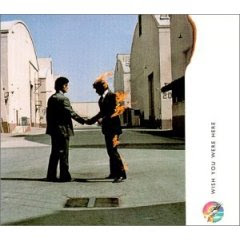
I recall the words of “Wish You Were Here” suddenly:

So,

So you think you can tell

Heaven from Hell,
blue skies from pain.
Can you tell a green field

from a cold steel rail?

A smile from a veil?

Do you think you can tell?

And did they get you to trade

your heroes for ghosts? 
Hot ashes for trees?
Hot air for a cool breeze?
Cold comfort for change?
And did you exchange

a walk-on part in the war

for a lead role in a cage?
How I wish, how I wish you were here.
We're just two lost souls swimming in a fish bowl,

year after year,

Running over the same old ground. 
What have you found?

The same old fears.
Wish you were here.


01 July 2008

Wind mills and the sun

I have written previously about the concepts for sustainable power. The only real source of sustainable power available to us is the sun. I suppose one must also consider the possibility of generating power from tidal activity, energy that is driven by the lunar-terrestrial system, but I have not seen too many success stories in that area. So I guess it is reasonable to consider the sun for now as the only candidate.

It drives the climate system and thus winds and rain. Rivers may be used for hydro-electric power and winds may be harvested by wind generators. We can use the direct energy of the sun to heat solar heaters and to cook food in the heat of solar collectors, or we can use photo-voltaic cells to change light into electricity. Heliostats can be used to drive turbines for generation of electricity. Quite a diverse range of options provided we are willing to consider them all carefully. It seems though that we have all sorts of issues with some of these options, like the fact that many people dislike wind farms. They claim that it disturbs the landscape. I suppose it is true that one could find it disturbing to see these machines all over the place, but at the same time we have no problem with the aesthetic disaster posed by steel power cable pylons, or coal fired power stations belching smoke. People consider hydro-power, but often forget the impact of building weirs and channeling systems in fragile river eco systems to tap into the energy.

The point is that everything has a price: what we need is to develop an unbiased score card for all these alternatives to fossil fuels. Communities must consider the costs of being completely reliant on the electricity network or to be part of a system that supplies much of what is needed around where they live. The video on this page was recorded close to Shrivenham. It shows the turbines on the Westmill wind farm that belongs to a co-operative of 2400 members. What can we do in our own communities to lighten the burden on our planet?

20 June 2008

Developed World Plus

Sweden is an amazing country with an amazing culture. During my recent visit I was impressed by the Swedes and their way of doing things. It seems that they are preparing constantly for the future – a long term plan. They are very punctual, and service orientated. Their systems work. If it fails, they are quick to repair and maintain it and quick to explain why delays occur when they do.

Stockholm is remarkably clean for such a big city with so many visitors. At the same time there is a keen sense of caring for nature, for bringing up their kids in the first few years at least in a close family unit and for being part of their nation. There is much to learn there, and in all my discussions, the people were open and engaging, free of fears of being hi-jacked or attacked. Children and women are safe, even late at night on the tube.

A warming and calming experience, it showed me again that it is possible for humanity to live in reasonable harmony. It only requires respect, a sense of belonging and above all, the discipline to take responsibility for the here and now and for the future. They do not dwell in the past and they do not shift blame. This is what we must achieve in South Africa as well. Yes, Sweden do have some ghastly issues too, but it is being managed actively, decisions are made and executed. How do you become “First World Plus”? I quote a new friend in Sweden: “I make decisions and act on them, I do not change my decisions, I only make new ones.” Subtle.

Visitors to this page came from:

Tweets

    follow me on Twitter

    Places I've Been